LengthsHalf day · Full day · Two days
GroupPrivate, up to 6 guests
LanguageEnglish (Japanese on request)
Meeting pointSakuragicho Station for the half day. Yokohama Station, East Exit, for the full day.
Overview

The port I'm based in

Yokohama is my home base. Its Chinatown grew from the Chinese merchants who set up shop after the port opened, and it now has more than 600 shops behind its gates. Kanteibyo there traces back to 1862, when Chinese residents are said to have opened a shrine to Guan Yu, the general from the Three Kingdoms.

Yamashita Park opened in March 1930 on land built from the rubble of the Great Kanto Earthquake. Moored beside it is the Hikawa Maru, a 1930 liner that hit mines three times as a hospital ship in the war and didn't sink. Charlie Chaplin used its first-class suite.

The roof of Osanbashi pier is a park that's open 24 hours, shaped like a whale's back. In 2018 Nikkei Plus 1 ranked its night view of Minato Mirai the best free night view in Japan.

Highlights

  • Walk through Yokohama Chinatown to Kanteibyo
  • Board the Hikawa Maru, the only surviving pre-war Japanese-built passenger-cargo liner
  • Stand on the whale-back roof of Osanbashi pier
  • Ride the YOKOHAMA AIR CABIN ropeway from Sakuragicho
  • Walk the gardens of Sankeien, with 10 buildings listed as Important Cultural Properties (full day)
Routes

Pick the length that suits your day

Half day (3 to 4 hours)

Over the water by ropeway, then along the harbour to Chinatown.

  1. YOKOHAMA AIR CABINa city ropeway from Sakuragicho Station, 1,000 yen one way.
  2. Yokohama Red Brick Warehousewarehouses from the late Meiji and early Taisho eras, reopened in 2002.
  3. Osanbashi pier roof and Yamashita Park.
  4. Chinatown and Kanteibyosnacks and lunch.

We finish at Motomachi-Chukagai Station.

Full day (7 to 8 hours)

A garden of old buildings, the Bluff, and the waterfront at dusk.

  1. Sankeienabout 40 minutes by city bus route 8 from Yokohama Station. Hara Sankei, a silk trader, opened it in 1906 with 17 historic buildings brought from Kyoto, Kamakura and elsewhere.
  2. Lunch in Chinatown.
  3. Yamate Western housesBerrick Hall, a British trader's home designed in 1930, is free to visit.
  4. Yamashita Park and the Hikawa Maru300 yen to go aboard, closed on Mondays.
  5. Osanbashi pier and the Red Brick Warehouse, then the AIR CABIN to Sakuragicho.

Two days

Yokohama fills two days on its own, or pairs well with Kamakura.

  1. Day 1Minato Mirai, Yamashita Park and Chinatown, plus the CUPNOODLES MUSEUM YOKOHAMA.
  2. Day 2Sankeien and the Yamate houses, or the JR Yokosuka Line to Kamakura for the Kamakura full day.
Photos

Yokohama through my lens

Details

Before you book

Included

  • Sho as your private guide for the length you book, in English (or Japanese, if you prefer)
  • A route planned for your group before the day
  • Food stops checked ahead for any allergies you tell me about

Not included

  • Train and bus fares (Minatomirai Line one-day pass 460 yen)
  • YOKOHAMA AIR CABIN (1,000 yen one way)
  • Entry, if we go in: Hikawa Maru (300 yen), Sankeien (700 yen), CUPNOODLES MUSEUM (500 yen)
  • Food and drinks

Good to know

  • The Sky Garden deck in Landmark Tower is closed for major repairs and isn't due to reopen until 2028 or later, so it's not on my routes.
  • In Chinatown I skip almond jelly and mooncakes, which often contain apricot kernel or almond, both rose-family foods. Tell me what you can't eat and I'll check other snacks before we buy.
  • The Yamate Western houses sit up on a hill, so allow time for the climb.
  • Rain plan: the Hikawa Maru, the CUPNOODLES MUSEUM, the Red Brick Warehouse and the Yamate houses are all indoors.
  • I look after the day itself. Train tickets, hotels and any entry tickets you want to book ahead are yours to arrange. I'll tell you exactly where and when to meet me.
  • We get around by train, bus and on foot, the same way people here do. I don't drive guests, and I'll show you how the ticket machines work as we go.
Your guide

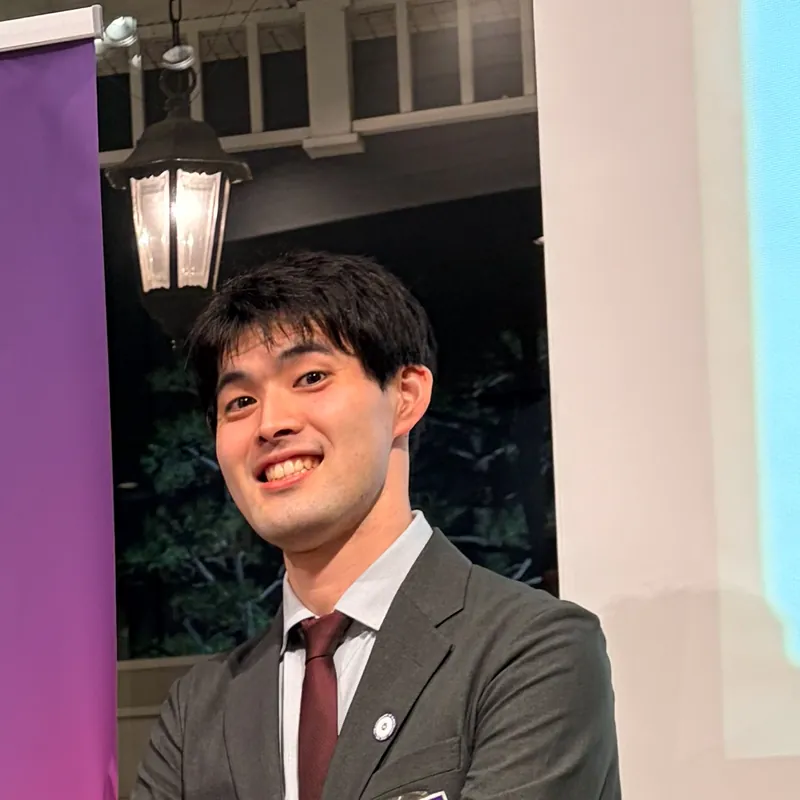
I'm Sho, and I'll be your guide

Sho, your guide

In January 2011, in my last year of junior high, I left Japan for Brisbane. I stayed until I'd finished university in March 2020. That's nine years of Australian school, uni and part-time jobs.

I speak English and Japanese without any trouble, and I don't get shy around people from other cultures. What I care about most on the day is simple: that you're having a good time.

I'm based in Yokohama. I've been photographing planes since 2009. Since moving back to Japan in 2020, photography has taken me to airports and towns all over the country. Every area I guide is somewhere I've been myself.

I have a serious kiwi fruit allergy (anaphylaxis) and react to some fruit in the rose family. So I check our food stops with the restaurants before the day. If there's anything you can't eat, tell me when you first get in touch.

  • Nine years in Brisbane, from junior high to the end of university
  • Comfortable in English and Japanese
  • Has been to every area on this site
  • Checks food stops ahead of the day
Pricing

Quotes in six currencies

Free quote

Quotes are provided in USD, CAD, AUD, NZD, GBP or EUR, so you can skip the hassle of currency conversion. Other currencies are quoted in USD. Each quote covers your whole group of up to six people. When you send an enquiry, please include your preferred dates and the kinds of experiences you'd like.

FAQ

Questions people ask

What should we eat in Yokohama?

Kiyoken's shumai, sold since 1928 and made with pork and dried scallop, is the local classic. In Chinatown we can try steamed buns, and I check the ingredients at each shop.

Can we take photos inside the Yamate houses?

Berrick Hall asks visitors not to take photos inside. Outside is fine.

Free quote

Come and see my city

Tell me your date, how many of you there are and anything you can't eat. I'll send back a route and a free quote.

Ask for a free quote →
Chat on LINE